Walk into the Royal Court in London and you will see the full theatrical paraphernalia of English justice: black gowns, flowing robes, and the iconic horsehair wigs worn by barristers and judges. It is the image most people conjure when they think of British law.
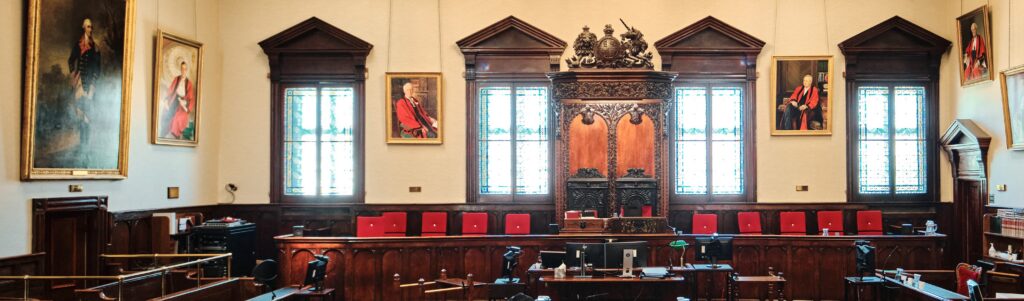
But cross the Channel to Jersey and step into the Royal Court there, and something immediately strikes you. Jersey Advocates are robed, certainly, but they are distinctly bare headed.
For visitors accustomed to the English courts, it can be striking. Jersey is a Crown Dependency, so why this fundamental difference in courtroom dress?
The answer reveals something important about how Jersey and its legal system has evolved independently, even with its constitutional ties to the Crown.
A separate legal jurisdiction
To understand why Jersey’s Advocates do not wear wigs, you need to start with the island’s constitutional position. Jersey is a Crown Dependency, yes, but it is also a separate legal jurisdiction. It has its own parliament, the States Assembly, its own courts, and a distinct legal history that is separate from England’s.
The crucial point is this: Jersey’s legal foundations do not rest on English common law. They rest on the Grand Coutumier de Normandie, the ancient customary law of Normandy. For centuries after the Norman Conquest, Jersey’s legal culture remained more closely aligned with continental Europe, particularly France, than with England. Even as political ties with England strengthened over the centuries, Jersey fiercely protected its distinct legal heritage.
Wigs are younger than you think
Here is something that surprises many people: court wigs are not an ancient medieval tradition. They are not rooted in Magna Carta or centuries of common law practice. They are a relatively modern invention, and frankly, they began as a fashion statement.
Horsehair wigs did not arrive in English courts until after the Restoration of the monarchy in 1660. Charles II returned from exile in France (having popped into Jersey a couple of times) with Continental tastes, and big hair was fashionable among the European aristocracy. By the early 18th century, wigs had become standardised formal wear for polite society across England. The courts adopted them to add gravity, anonymity, and authority to proceedings.
The interesting part is what happened next. As fashion moved on and wigs fell out of favour in wider society, they remained embedded in English courtrooms. They became tradition.
Where the paths diverged
This is precisely where England and Jersey took different routes. While the English Bar embraced this 17th-century fashion trend, the Jersey Bar did not.
Continental legal systems, particularly in France, used robes to denote legal status but never adopted the powdered wig tradition that became standard across the Channel in England. Jersey, with its historical and cultural ties to Normandy, simply retained its older traditions. The pre-wig dress code was already established. There was no reason to change it.
Today, when a Jersey Advocate stands up in the Royal Court, their traditional gown and bands, minus the wig, carry quiet significance.
It is a visible, tangible connection to more than 800 years of Norman legal heritage.
It is a reminder that Jersey’s legal system was never simply an extension of England’s, even if outsiders often assume it is.